Hands Down Animals · Printable fact sheet
Polar Bear
Ursus maritimus
Quick facts
| Scientific name | Ursus maritimus |
|---|---|
| Size | Males average 2.4–2.6 meters long, females about 1.8–2.0 meters. |
| Weight | Males average 400–600 kg; females 200–350 kg. |
| Lifespan | Typically 15–18 years in the wild; maximum recorded 34… |
| Diet | Primarily seals, especially ringed and bearded seals, supplemented occasionally by birds, walrus carrion… |
| Habitat | Annual and multi-year sea ice, Coastal shorelines near the Arctic Ocean, Ice floes and… |
| Where it lives | Arctic Ocean, Chukchi Sea, Beaufort Sea, Barents Sea |
| IUCN status | Vulnerable |
| Population | 22,000-31,000 |
| Top speed | 40 km/h |
| Family | Ursidae |
About the polar bear
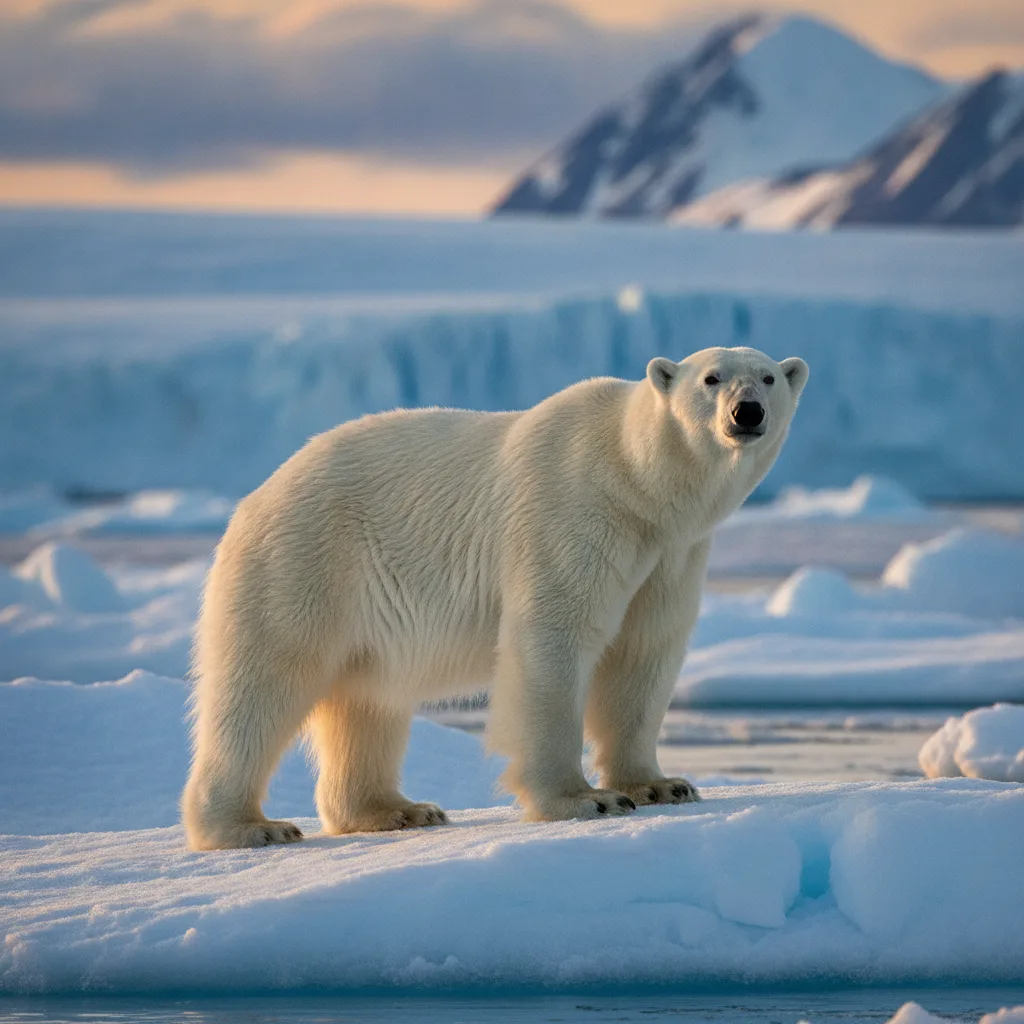
Polar bears live on the sea ice of the Arctic Ocean, where they hunt ringed and bearded seals at breathing holes and along the ice edge. They are the largest land carnivores, with males weighing up to 600 kilograms, and their fur is actually translucent — it looks white because it scatters light over black skin. The species is listed as Vulnerable, its main threat being the loss of summer sea ice.
Five things to know
- Polar bears are considered marine mammals, spending much of their lives on sea ice and swimming between floes.
- They are the largest living bear species and the world's largest land carnivores.
- Polar bears rely almost exclusively on seals for food, mainly ringed and bearded seals.
- Their fur is actually translucent, not white, and their skin underneath is black to absorb heat.
- Climate change and melting sea ice pose the greatest threat to polar bear survival.
Homeschool unit: Animals homeschool guide — Habitats, adaptations and food chains as a graded unit, with the polar bear as one of its worked examples.