Hands Down Animals · Printable fact sheet
Red Fox
Vulpes vulpes
Quick facts
| Scientific name | Vulpes vulpes |
|---|---|
| Size | Head-body length typically 45–90 cm, tail 30–55 cm |
| Weight | 3–14 kg depending on region and sex |
| Lifespan | 2–5 years in wild, up to 14 years in captivity |
| Diet | Opportunistic omnivore: hunts small mammals (voles, mice, rabbits), birds, insects, eggs, fruit, berries… |
| Habitat | woodlands, grasslands, tundra |
| Where it lives | Europe, North America, Asia, North Africa |
| IUCN status | Least Concern |
| Population | 7,000,000 - 30,000,000 |
| Top speed | 50 km/h |
| Family | Canidae |
About the red fox
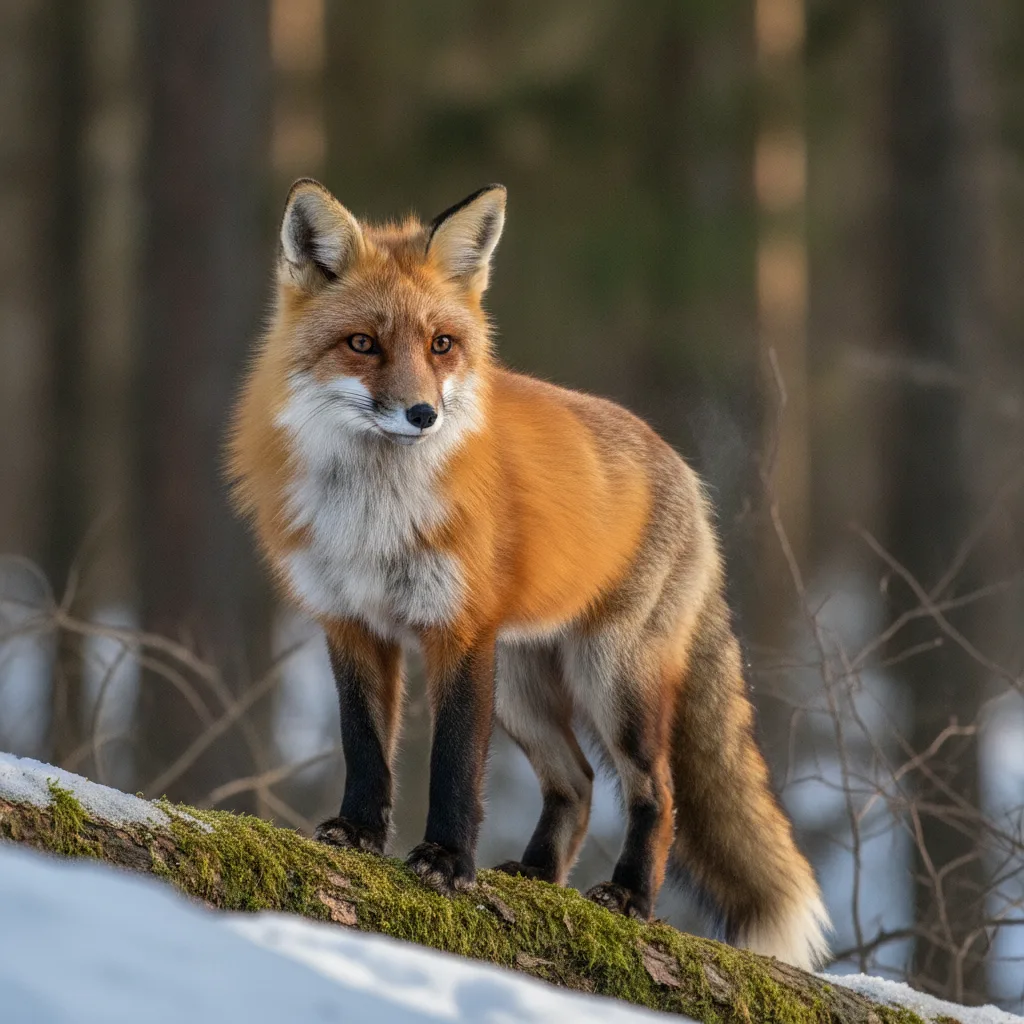
The red fox has the widest natural range of any land carnivore, spanning the Northern Hemisphere from Arctic tundra to North Africa and, following introduction, Australia. It hunts small rodents with a characteristic high pounce and can hear a mouse moving under snow or grass. The species is Least Concern and thrives in cities as readily as in open country.
Five things to know
- The red fox is the most widely distributed wild carnivore on Earth.
- They adapt to environments from Arctic tundra to suburban gardens.
- Red foxes use over 20 types of vocalizations to communicate.
- Red foxes have exceptional hearing and can pinpoint prey under snow.
- They are famous for their intelligence and cunning in folklore.
Homeschool unit: Animals homeschool guide — Habitats, adaptations and food chains as a graded unit, with the red fox as one of its worked examples.