Hands Down Animals · Printable fact sheet
Shark
Selachimorpha
Quick facts
| Scientific name | Selachimorpha |
|---|---|
| Size | Ranges from 15 cm (dwarf lanternshark) to 12 m (whale shark), most species 1–3… |
| Weight | Ranges from less than 1 kg to over 19,000 kg (whale shark). |
| Lifespan | Typical lifespan is 20–30 years, some species over 70… |
| Diet | Sharks are mostly carnivores; diets range from plankton (filter-feeding whale sharks and basking sharks) to… |
| Habitat | Open ocean (pelagic), Coastal shallows, Coral reefs |
| Where it lives | Pacific Ocean, Atlantic Ocean, Indian Ocean, Southern Ocean |
| IUCN status | Threatened (Several species: Vulnerable, Endangered, Critically Endangered) |
| Population | Unknown; estimated tens of millions, but rapidly declining |
| Top speed | 56 km/h |
| Family | Various (e.g., Carcharhinidae, Lamnidae, Sphyrnidae, Rhincodontidae) |
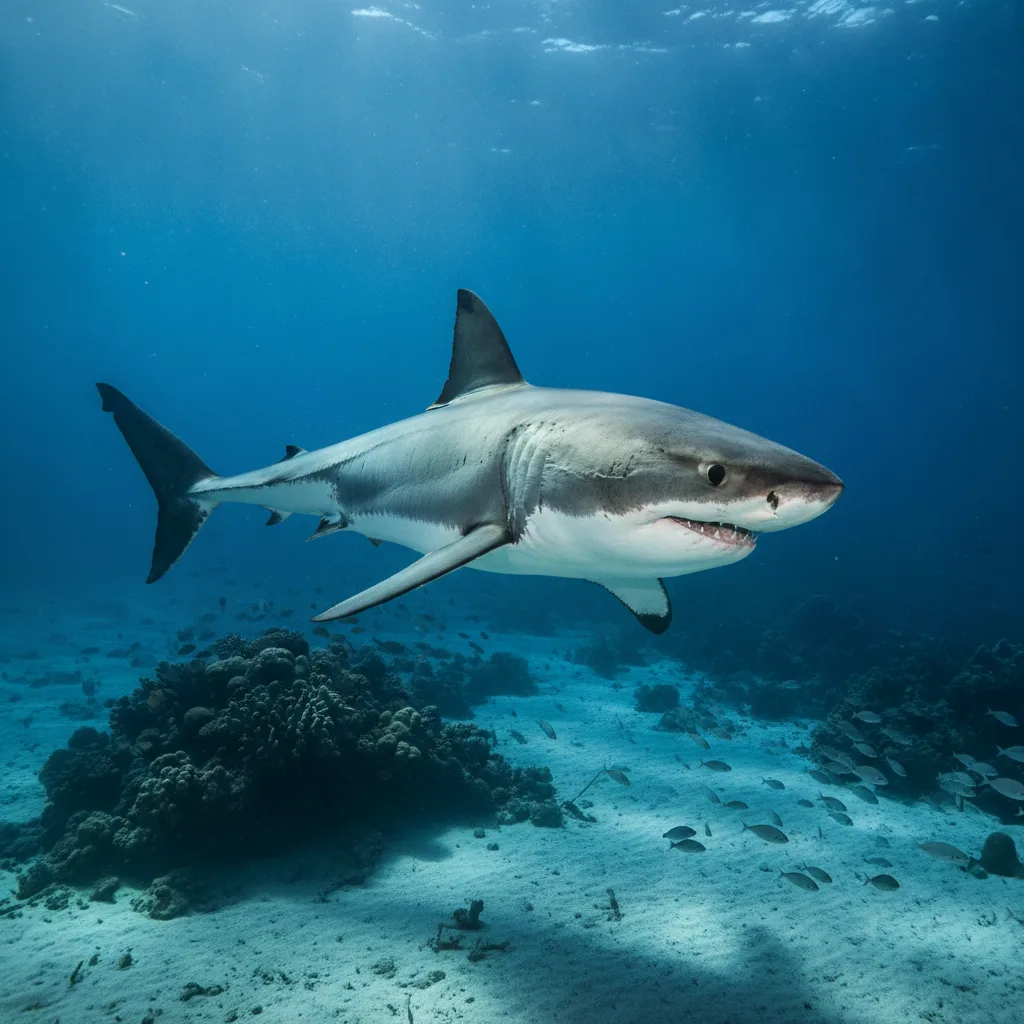
About the shark
Sharks have patrolled the oceans for more than 400 million years, predating both trees and dinosaurs, and the roughly 500 living species range from the hand-sized dwarf lanternshark to the 18-metre whale shark. Their skeletons are cartilage rather than bone, and pores on the snout detect the faint electrical fields given off by hidden prey. More than a third of shark and ray species are now threatened with extinction, mainly through overfishing.
Five things to know
- Sharks have survived more than 400 million years—older than dinosaurs.
- Some shark species can live more than 100 years; the Greenland shark may live over 400 years.
- The whale shark is the largest fish alive, reaching up to 18 meters in length.
- Sharks are critical apex predators, shaping marine ecosystems.
- Humans kill an estimated 100 million sharks per year, mainly for fins and meat.
Homeschool unit: Sharks homeschool guide — A full shark unit: how shark senses, hunts and why sharks matter to the ocean, with activities by grade.