Hands Down Animals · Printable fact sheet
Siberian Tiger
Panthera tigris
Quick facts
| Scientific name | Panthera tigris |
|---|---|
| Size | 2.4 to 3.3 m (head and body length) |
| Weight | 180–306 kg (males), 100–167 kg (females) |
| Lifespan | 10–15 years in the wild, up to 20 in captivity |
| Diet | Primarily large ungulates such as red deer, sika deer, roe deer, and wild boar; also occasionally small… |
| Habitat | mixed coniferous-deciduous forests, taiga, mountainous forests |
| Where it lives | Russian Far East, Amur-Ussuri region, Sikhote-Alin Mountains, Eastern Siberia |
| IUCN status | Endangered |
| Population | 500-600 |
| Top speed | 65 km/h |
| Family | Felidae |
About the siberian tiger
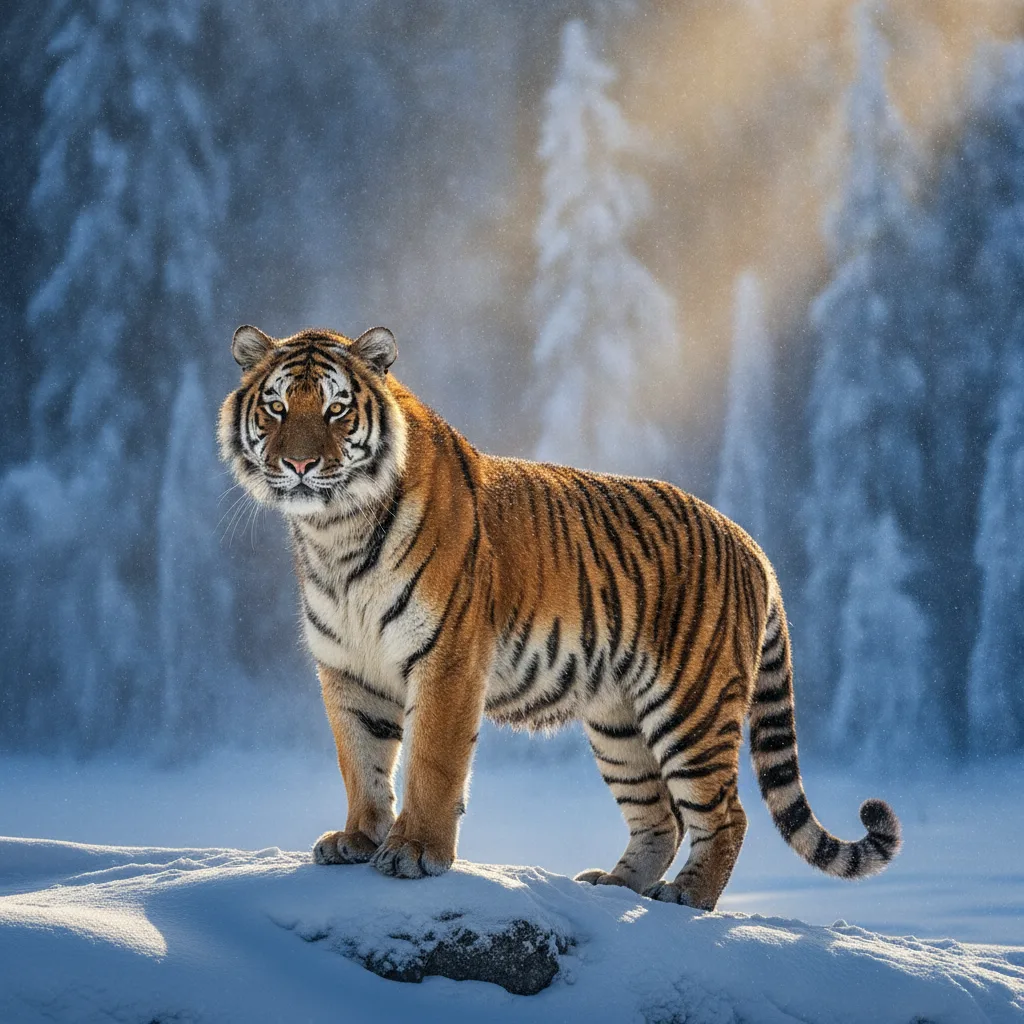
Siberian, or Amur, tigers live in the birch and pine forests of the Russian Far East and a corner of northeast China, where snow covers the ground for months each year. They are the largest tigers, with males over 3 metres long and 200 kilograms, and a single male's territory can exceed 1,000 square kilometres. Fewer than 50 remained in the 1940s; protection has raised the population to roughly 500–600, and the subspecies is Endangered.
Five things to know
- Siberian tigers are the largest wild cats on Earth.
- They have the palest coats and most widely spaced stripes among tigers.
- Historic population lows of ~20 individuals in the 1940s led to urgent conservation efforts.
- Their main prey are large deer and wild boar; a single meal can be 18 kg.
- These tigers can survive extreme winter temperatures of -40°C.
Homeschool unit: Animals homeschool guide — Habitats, adaptations and food chains as a graded unit, with the siberian tiger as one of its worked examples.