Hands Down Animals · Printable fact sheet
Snow Leopard
Panthera uncia
Quick facts
| Scientific name | Panthera uncia |
|---|---|
| Size | 1.0–1.5 meters body length, 0.8–1.0 meter tail |
| Weight | 27–55 kg |
| Lifespan | 10–15 years in the wild, up to 22 years in captivity |
| Diet | Primarily wild ungulates such as blue sheep, ibex, Himalayan tahr, argali, and marmots; opportunistically… |
| Habitat | Alpine and subalpine slopes, Rocky cliffs and outcrops, Glacial valleys |
| Where it lives | Himalayas, Tian Shan, Altai Mountains, Pamir Mountains |
| IUCN status | Vulnerable |
| Population | 4,000 - 6,500 |
| Top speed | 64 km/h |
| Family | Felidae |
About the snow leopard
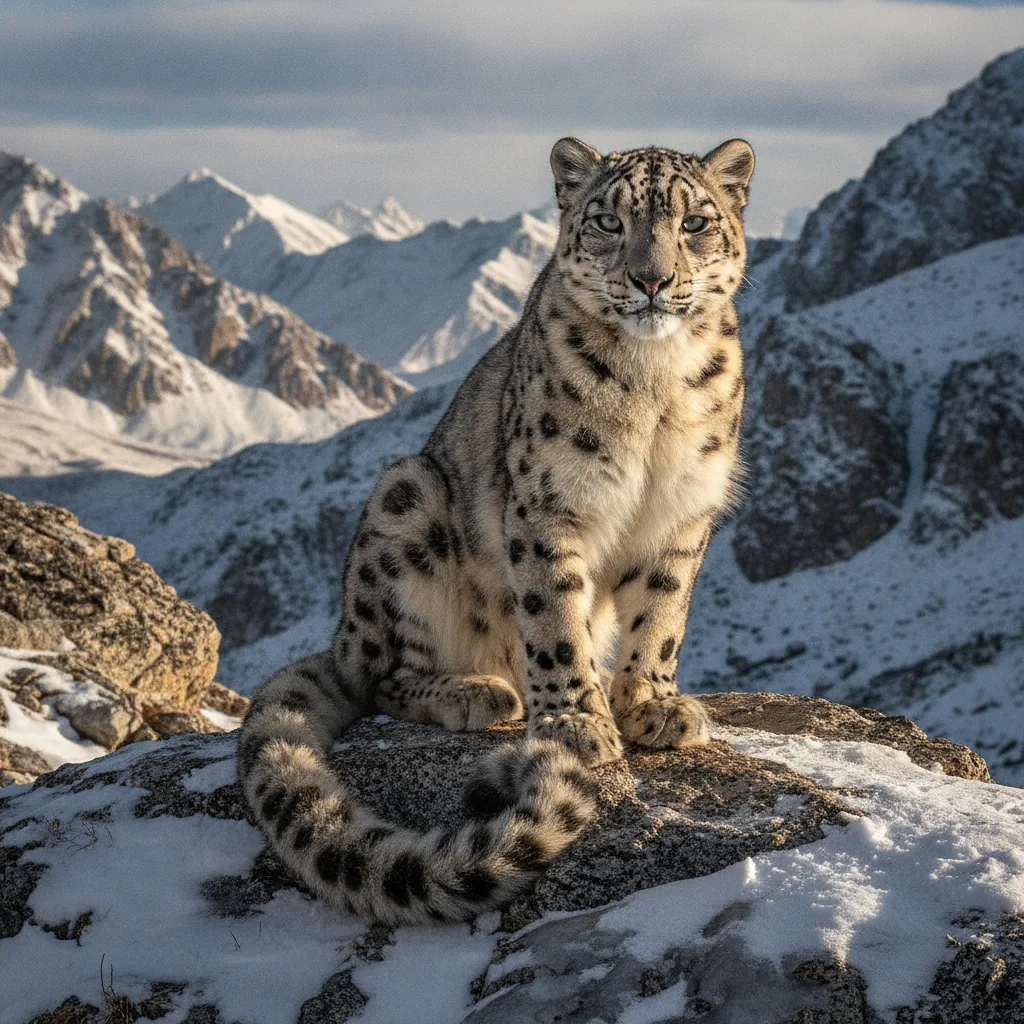
Snow leopards live above the treeline in the mountains of Central and South Asia, from the Himalaya to the Altai, at elevations of 3,000 to 5,000 metres or more. A metre-long tail helps them balance on cliffs and doubles as a wrap against the cold, and unlike other big cats they cannot roar. The IUCN lists the species as Vulnerable, with an estimated 4,000–6,500 remaining and few reliable counts.
Five things to know
- Snow leopards are master camouflagers, blending perfectly with rocky, snowy terrain.
- Unlike other Panthera species, snow leopards cannot roar due to differences in their larynx structure.
- Their exceptionally long, fluffy tails help with balance and act as warm blankets in the cold.
- They have the largest tail-to-body ratio of any cat, with tails growing up to 1 meter.
- Most snow leopards live in extremely remote, rugged mountains across 12 countries in Central and South Asia.
Homeschool unit: Animals homeschool guide — Habitats, adaptations and food chains as a graded unit, with the snow leopard as one of its worked examples.