Hands Down Animals · Printable fact sheet
Sumatran Orangutan
Pongo
Quick facts
| Scientific name | Pongo |
|---|---|
| Size | 1.2–1.4 meters tall |
| Weight | 35–50 kg (females), up to 90 kg (males) |
| Lifespan | 35–40 years in the wild (up to 58 years in captivity) |
| Diet | Mainly fruit (figs, durians, lychees), but also leaves, bark, flowers, insects, and occasionally bird eggs. |
| Habitat | tropical wet lowland forests, hill rainforests, peat swamp forests |
| Where it lives | Leuser Ecosystem, Gunung Leuser National Park, Bukit Tigapuluh National Park, Batang… |
| IUCN status | Critically Endangered |
| Population | 13,500 - 14,000 |
| Top speed | 4 km/h |
| Family | Hominidae |
About the sumatran orangutan
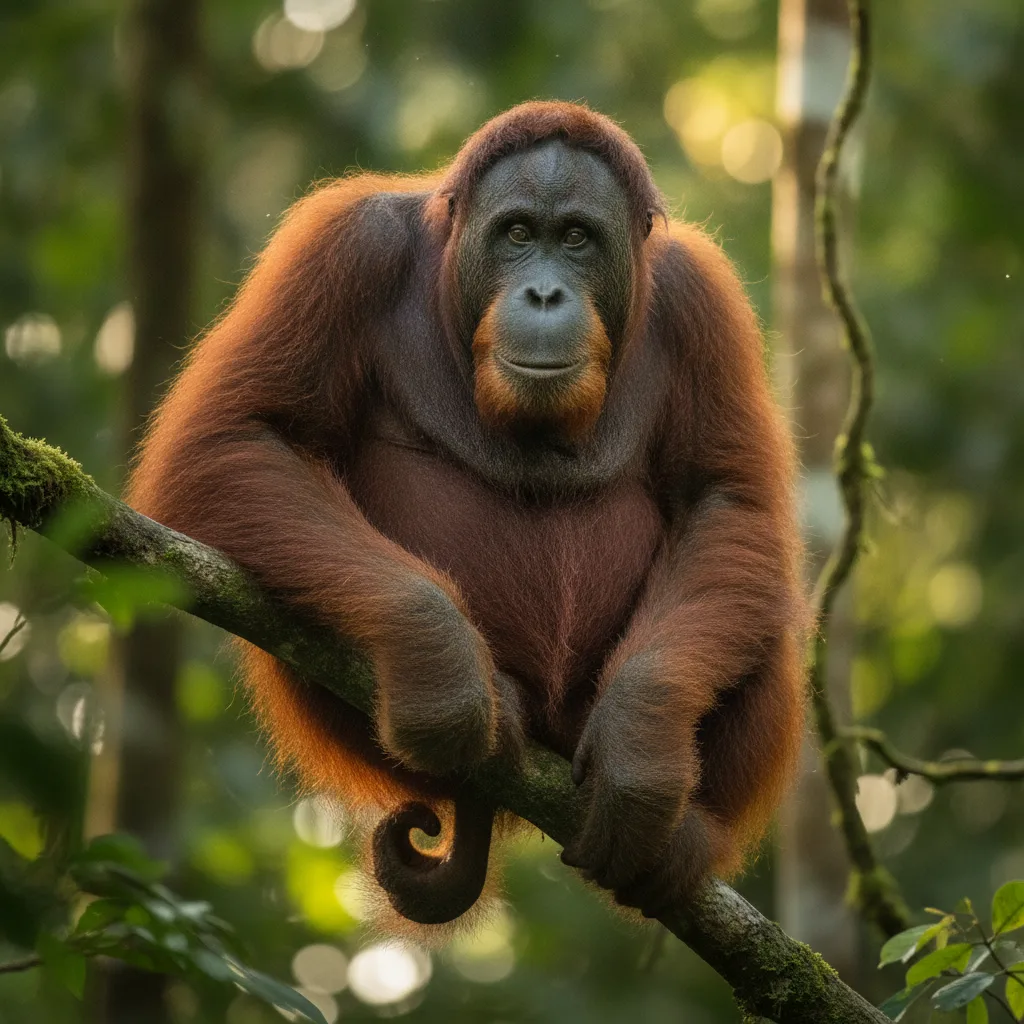
The Sumatran orangutan lives only in the rainforests of northern Sumatra, Indonesia, chiefly in the Leuser Ecosystem, and spends almost its entire life in the trees. It is more social and eats more fruit than its Bornean relative, and adult males grow wide cheek flanges and a throat sac used for long calls that carry over a kilometre. Around 14,000 remain and the species is Critically Endangered, threatened by logging and oil palm plantations.
Five things to know
- Sumatran orangutans are almost exclusively arboreal, rarely descending to the ground.
- They have the longest arms of any primate, with a span up to 2.2 meters.
- Their nests are woven intricately from branches and leaves and are used for sleeping each night.
- Sumatran orangutans use a wide variety of tools, including sticks to extract insects or honey.
- They share over 97% of their DNA with humans.
Homeschool unit: Animals homeschool guide — Habitats, adaptations and food chains as a graded unit, with the sumatran orangutan as one of its worked examples.