Hands Down Animals · Printable fact sheet
Tiger
Panthera tigris
Quick facts
| Scientific name | Panthera tigris |
|---|---|
| Size | 2.4–3.3 meters in length, tail adds 60–110 cm |
| Weight | 100–307 kg, with Siberian tigers on the upper end |
| Lifespan | 8–12 years in wild, up to 20–26 years in captivity |
| Diet | Large and medium mammals such as deer, wild boar, buffalo, antelope; occasionally birds, fish, or small… |
| Habitat | Tropical rainforests, Mangrove swamps, Temperate forests |
| Where it lives | India, Bangladesh, Nepal, Bhutan |
| IUCN status | Endangered |
| Population | 3,726 - 5,578 |
| Top speed | 65 km/h |
| Family | Felidae |
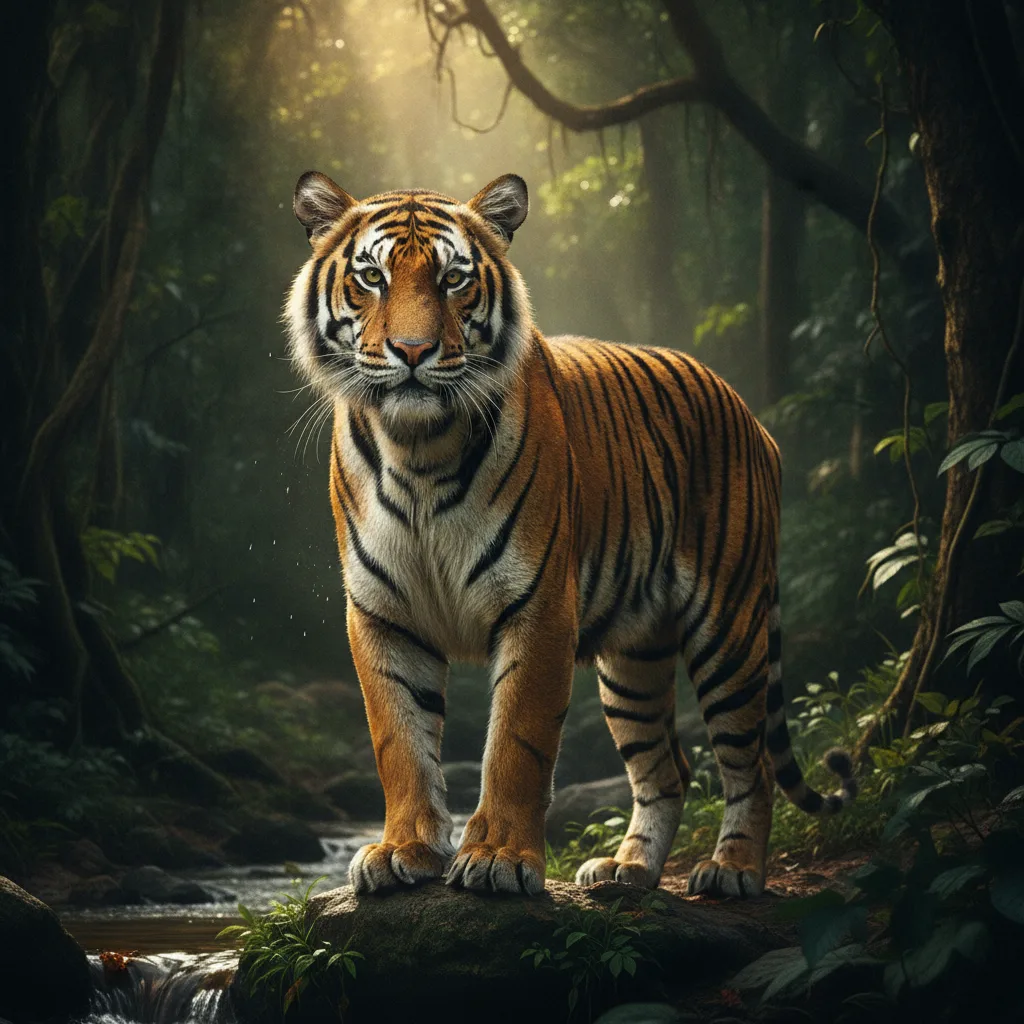
About the tiger
The tiger is the largest of the wild cats, with Amur males reaching over 3 metres from nose to tail, and it lives and hunts alone in forests, mangroves and grasslands from India to the Russian Far East. Each animal's stripe pattern is unique, and unlike most cats tigers are strong, willing swimmers that readily cross rivers. Around 4,500–5,500 remain in the wild, and the species is classified as Endangered.
Five things to know
- Tigers are the largest members of the cat family (Felidae).
- Each tiger's stripe pattern is unique, like a human fingerprint.
- Tigers can swim for kilometers and often enjoy bathing.
- Wild tiger numbers have dropped by over 95% since 1900.
- Only about 4,500 tigers are believed to remain in the wild.
Homeschool unit: Animals homeschool guide — Habitats, adaptations and food chains as a graded unit, with the tiger as one of its worked examples.