Hands Down Animals · Printable fact sheet
Vaquita
Phocoenidae
Quick facts
| Scientific name | Phocoenidae |
|---|---|
| Size | 1.4–1.5 meters |
| Weight | 40–54 kg (adults) |
| Lifespan | Average lifespan about 21 years |
| Diet | Vaquitas feed mainly on demersal fish (such as croakers), squid, and crustaceans found in shallow waters. |
| Habitat | Shallow coastal waters, Muddy or turbid estuaries, Warm, subtropical seas |
| Where it lives | northern Gulf of California |
| IUCN status | Critically Endangered |
| Population | about 10 left (as of 2023) |
| Family | Phocoenidae |
About the vaquita
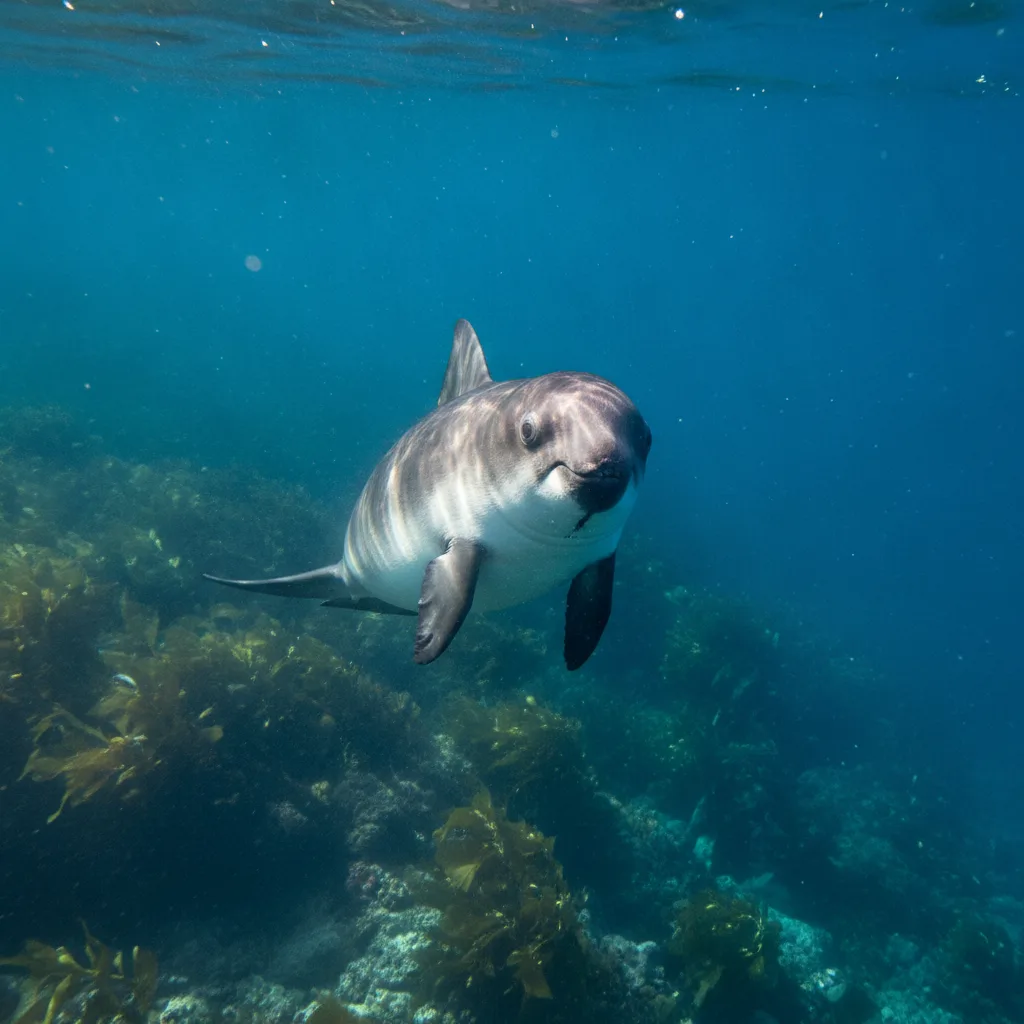
The vaquita is a small porpoise found only in the northern Gulf of California, Mexico — the smallest range of any marine mammal. It is about 1.5 metres long with dark rings around its eyes and is almost never seen alive, surfacing briefly and avoiding boats. Drowning in gillnets set for totoaba fish has left roughly 10 individuals, making it the most endangered marine mammal in the world; it is Critically Endangered.
Five things to know
- Vaquitas are the world's most endangered marine mammal, with fewer than 10 individuals left.
- They have striking dark eye patches and lips, giving them a uniquely expressive face.
- Vaquitas avoid deep water and live only in the shallow, turbid waters of the northern Gulf of California.
- Their main threat is accidental entanglement in illegal gillnets targeting another endangered species, the totoaba fish.
- First described by science only in 1958, vaquitas have always had a very restricted range.
Homeschool unit: Ocean homeschool guide — An ocean unit on marine food webs, tides and conservation, with the vaquita as a case study.