Hands Down Animals · Printable fact sheet
Whale
Cetacea
Quick facts
| Scientific name | Cetacea |
|---|---|
| Size | 4 to 33 meters in length, depending on species |
| Weight | 1,000 kg (smallest) to 180,000 kg (blue whale) |
| Lifespan | Typically 30–90 years, with some species exceeding 100 years |
| Diet | Baleen whales primarily eat krill and small schooling fish; toothed whales eat fish, squid, and in some… |
| Habitat | Open ocean (pelagic), Continental shelves, Polar ice edges |
| Where it lives | North Atlantic Ocean, South Atlantic Ocean, North Pacific Ocean, South Pacific Ocean |
| IUCN status | Varies by species, from Least Concern to Endangered |
| Population | 1,300,000 - 1,500,000 |
| Top speed | 50 km/h |
| Family | various (e.g., Balaenopteridae, Physeteridae, Delphinidae) |
About the whale
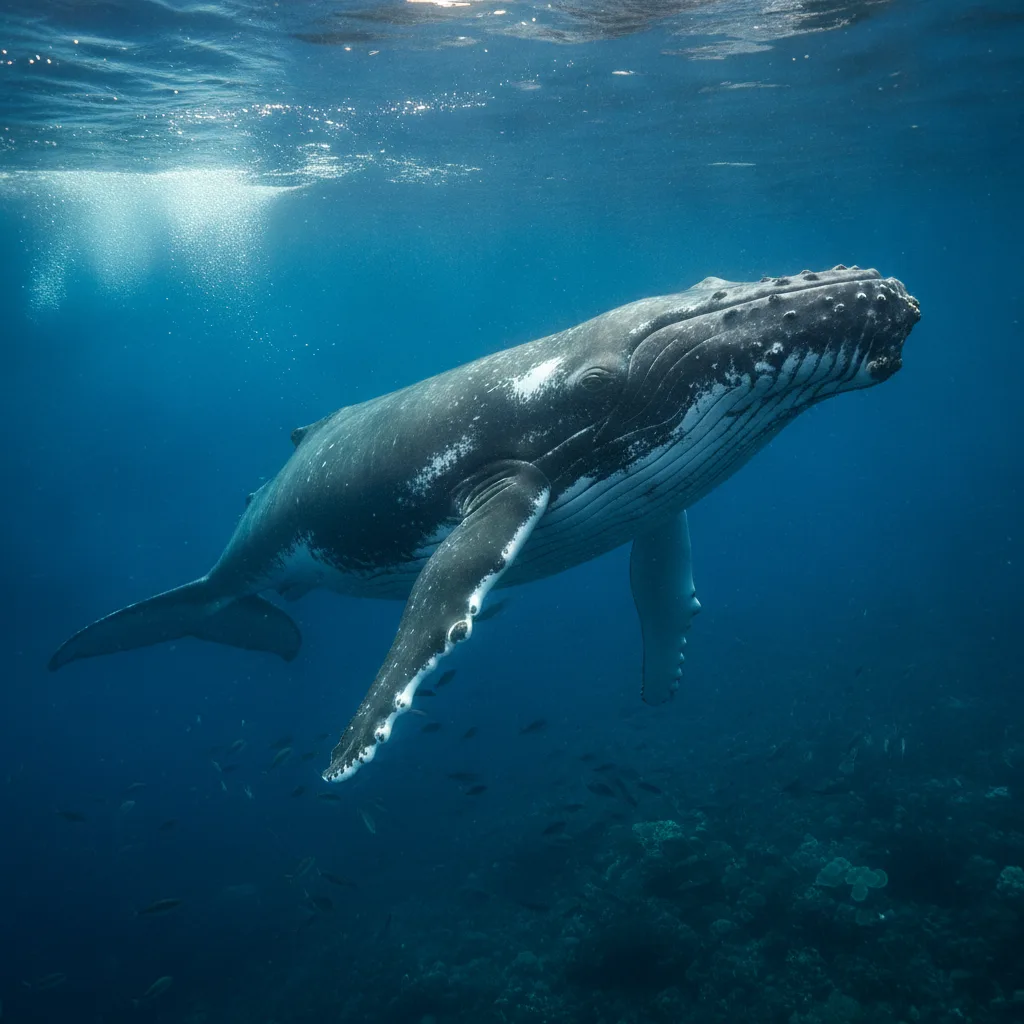
Whales are fully aquatic mammals split into two groups: baleen whales that strain krill and small fish through plates in their mouths, and toothed whales such as sperm whales and orcas. Humpbacks travel up to 8,000 kilometres each way between polar feeding grounds and tropical breeding waters, one of the longest migrations of any mammal. Commercial whaling pushed several species close to extinction; many have recovered since the 1986 moratorium, but the North Atlantic right whale still numbers only a few hundred.
Five things to know
- Blue whales are the largest animals ever known to exist.
- Some sperm whales can dive deeper than 2,000 meters and hold their breath for over an hour.
- Whales evolved from land-dwelling mammals over 50 million years ago.
- Different whale species communicate using complex sounds and songs, some audible hundreds of kilometers away.
- Many whales undertake migrations of thousands of kilometers annually.
Homeschool unit: Ocean homeschool guide — An ocean unit on marine food webs, tides and conservation, with the whale as a case study.