Hands Down Animals · Printable fact sheet
Wolf
Canis
Quick facts
| Scientific name | Canis |
|---|---|
| Size | 1–1.6 m body length, 38–85 cm shoulder height |
| Weight | 25–45 kg (can reach 80 kg for some large males) |
| Lifespan | 6–8 years in the wild (up to 16 in captivity) |
| Diet | Carnivorous: mainly large ungulates (deer, elk, moose), sometimes smaller mammals, birds, and carrion… |
| Habitat | Boreal and temperate forests, Mountains, Tundra |
| Where it lives | Alaska, Canada, Northern Rocky Mountains, Eurasian Steppe |
| IUCN status | Varies by species (Gray Wolf: Least Concern; Red Wolf: Critically Endangered; Ethiopian Wolf: Endangered) |
| Population | 200,000 - 250,000 |
| Top speed | 60 km/h |
| Family | Canidae |
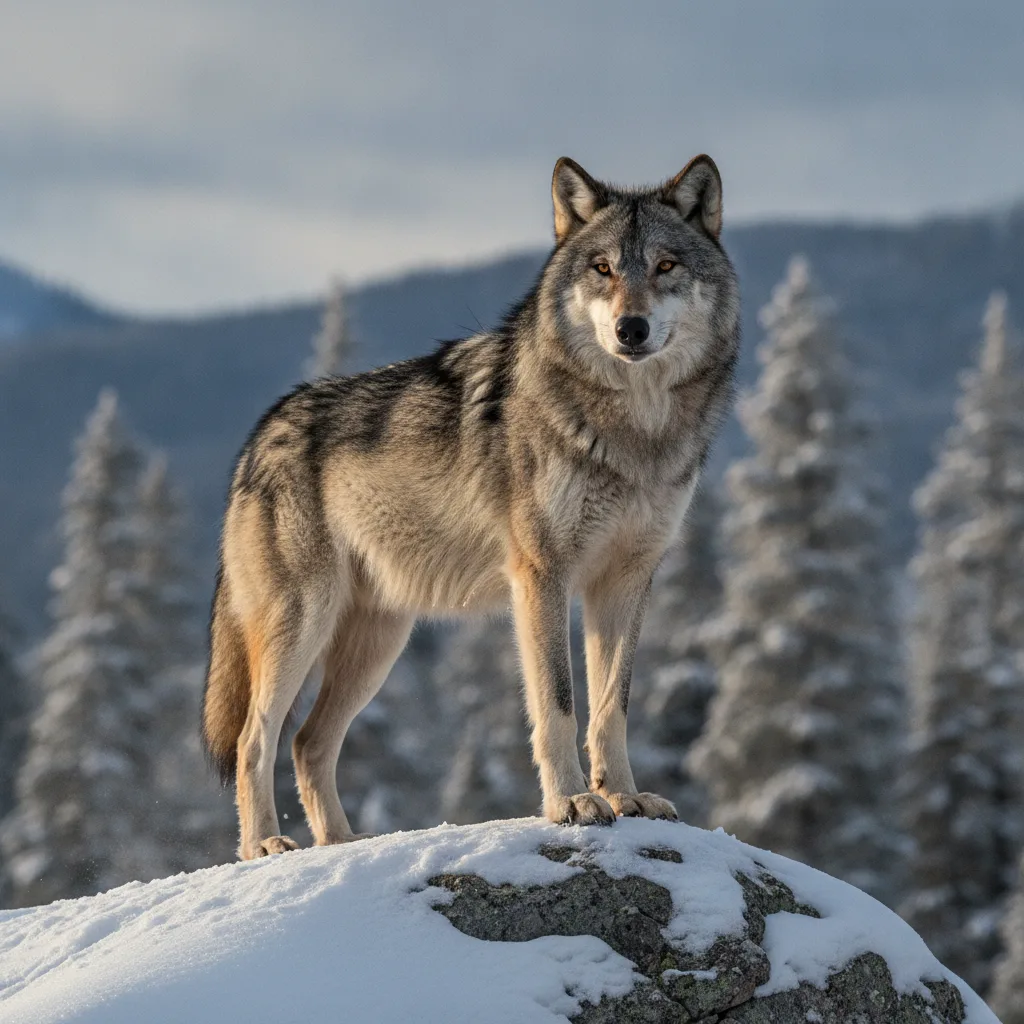
About the wolf
Grey wolves once ranged across most of the Northern Hemisphere and still occupy tundra, forest and mountain country from Alaska to Mongolia. A pack is usually a family — a breeding pair and their offspring from the past few years — that cooperates to bring down prey many times a single wolf's weight, from deer to bison. Globally the species is Least Concern, though populations in Western Europe and the lower 48 US states are only recently recovering from near-extermination.
Five things to know
- Wolves are the largest members of the Canidae family.
- A wolf pack is a highly organized family group led by an alpha pair.
- Gray wolves can travel up to 30–40 km per day and reach speeds of 60 km/h.
- Wolves communicate through howls, body language, and scent marking.
- Red wolves are among the most endangered canids worldwide.
Homeschool unit: Animals homeschool guide — Habitats, adaptations and food chains as a graded unit, with the wolf as one of its worked examples.