Panda
Ailuropoda
The giant panda lives only in the bamboo forests of mountainous central China, where an adult may spend 12 hours a day eating 12–38 kilograms of bamboo. It belongs to the bear family yet has an enlarged wrist bone that works like a thumb for gripping stems. Decades of reserve creation moved the panda from Endangered to Vulnerable in 2016, with roughly 1,800 left in the wild.
Quick facts: Size 1.2–1.9 m in length; shoulder height 60–90 cm · Lifespan 20 years average in the wild; up to 38 years in captivity · IUCN status Vulnerable
Print the fact sheet — a free one-page PDF for homeschool and classroom use
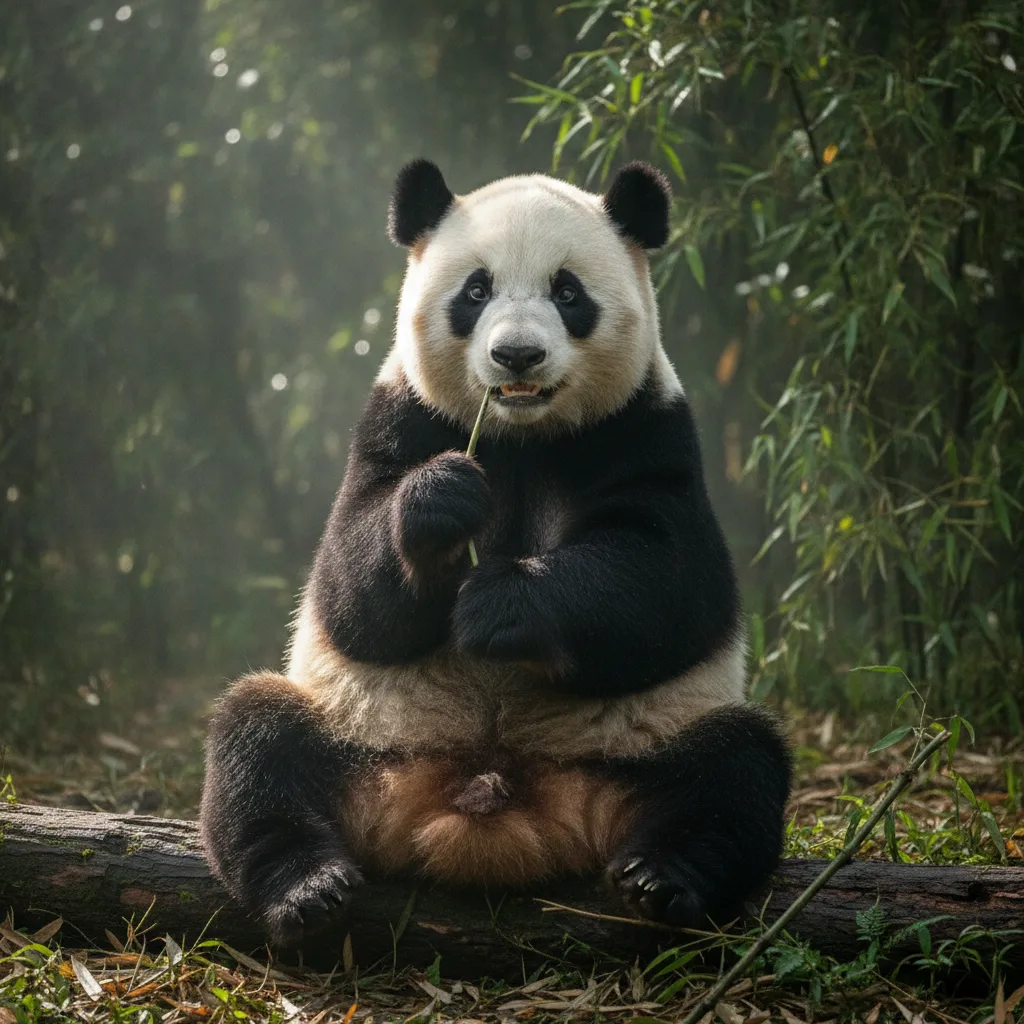
Pandas at a glance
| Scientific name | Ailuropoda |
|---|---|
| IUCN status | Vulnerable |
| Population | 1864–2060 |
| Population trend | increasing |
| Weight | 100–160 kg |
| Length | 1.4–1.9 m |
| Lifespan | 20–38 years |
| Top speed | 20 km/h |
| Class | Mammalia |
| Order | Carnivora |
| Family | Ursidae |
| Known species | 2 |
Need to know
- Giant pandas are unique among bears for their almost exclusively bamboo-based diet.
- They possess a modified wrist bone, the 'pseudothumb,' to grasp bamboo stems.
- Pandas have the largest molars among bears, adapted for crushing bamboo.
- Giant pandas are classified as 'Vulnerable' rather than 'Endangered' due to population recovery.
- Pandas can spend up to 14 hours a day eating bamboo.
- The Qinling panda is the only known wild population with brown and tan fur.
About the Pandas
Pandas, especially the iconic giant panda, are among the world's most recognized and beloved mammals. Endemic to China, giant pandas are primarily found in a handful of mountainous forest regions where bamboo—making up over 99% of their diet—grows in abundance. Their distinctive black-and-white appearance and gentle demeanor have made them global ambassadors for wildlife conservation.
The lesser-known Qinling panda is a distinct form of giant panda with unique brown-and-tan coloration, limited to the Qinling Mountains. While their populations are slowly increasing thanks to conservation efforts, pandas remain threatened by habitat loss and fragmentation, and their reliance on bamboo makes them extremely vulnerable to environmental change.
Physical characteristics
Size: 1.2–1.9 m in length; shoulder height 60–90 cm. Weight: 70–160 kg (adults), with most wild adults between 85–125 kg. Lifespan: 20 years average in the wild; up to 38 years in captivity.
- Bold black-and-white fur with eye patches
- Large head and robust body
- Short, stubby tail
- Enlarged 'pseudothumb' for grasping
- Broad, flat molars for bamboo grinding
Notable species
- Giant Panda (Ailuropoda melanoleuca) — Vulnerable. Temperate broadleaf and mixed forests with dense bamboo understory Regions: Sichuan, Shaanxi, Gansu, Qinling Mountains, Minshan Mountains.
- Qinling Panda (Ailuropoda melanoleuca qinlingensis) — Vulnerable. High-altitude temperate forests of the Qinling Mountains Regions: Qinling Mountains.
Habitat and range
Original range: Once ranged across lowland and mountain forests of southern and eastern China, northern Vietnam, and northern Myanmar.
Current distribution: Restricted to fragments of mountain forests in central China: Sichuan, Shaanxi, and Gansu provinces.
Preferred environments: Temperate broadleaf forest, Mixed-coniferous forest, Dense bamboo understory, Mountain slopes 1200–3400 meters altitude
Regions: Sichuan, Shaanxi, Gansu, Qinling Mountains, Minshan Mountains, Daxiangling Mountains, Xiaoxiangling Mountains, Liangshan Mountains
Where to see Pandas
- Wolong National Nature Reserve, Sichuan — Spring to early Summer. Guided tours are available, with chances to see pandas in semi-wild enclosures.
- Qinling Giant Panda Research Center, Shaanxi — Late Spring. Qinling pandas are only found in this region, and this is the best spot for their observation.
- Chengdu Research Base of Giant Panda Breeding — Morning, all year. This well-known center houses rescued and captive-bred pandas and is accessible for tourists.
Behavior and diet
Diet: Over 99% bamboo; occasionally small mammals, fish, or carrion.
Social structure: Solitary, except during mating season and mothers with cubs.
Communication: Vocalizations (bleats, barks, growls, honks), scent marking via glands at the base of their tail, and visual signals.
- Spend most of their waking hours eating bamboo.
- Climb trees to escape predators or to sleep.
- Mark territory using scent from anogenital glands.
- Perform playful somersaulting and rolling, especially in young individuals.
Interactions with other animals
- Leopard (predator): Leopards occasionally prey on panda cubs if mothers are not vigilant.
- Golden snub-nosed monkey (competitive): Both species compete for bamboo shoots in overlapping habitats.
- Humans (threat): Habitat encroachment and poaching historically threatened pandas, though direct poaching is now rare.
Conservation
IUCN Red List status: Vulnerable
Threats
- Habitat fragmentation due to agriculture and road construction
- Climate change affecting bamboo growth
- Very low birth rate and slow reproduction
- Genetic isolation of small populations
Conservation efforts
- Creation of nature reserves and wildlife corridors
- Captive breeding and reintroduction to the wild
- Anti-poaching patrols and strict enforcement
- International collaboration and funding for research
How to help
- Support reputable conservation organizations working in panda habitat.
- Promote habitat-friendly tourism and responsible travel.
- Participate in wildlife adoption or sponsorship programs.
- Advocate for bamboo forest protection and sustainable land use in China.
Pandas facts for kids
Pandas are cute, bear-like animals that live in the mountains of China and love to eat bamboo. They have big round bodies, black eye patches, and are famous for being very gentle. Thanks to lots of help from people, there are now more pandas in the wild than before!
- A newborn panda is smaller than a soda can!
- Pandas spend most of their day munching on bamboo.
- Their 'thumb' is actually a special bone to help hold bamboo.
- Pandas roll and tumble for fun, especially when they're young.
- They have a silly, bleating call that sounds like a baby goat.
Did you know? Did you know a giant panda can peel and eat more than 20 different kinds of bamboo every day?
Watch & learn
- Giant Pandas: The Secret Lives of China's Gentle Giants — BBC Earth. This documentary dives deep into the day-to-day life and intriguing behaviors of giant pandas (Ailuropoda melanoleuca), filmed in their natural bamboo forests. The BBC renowned for its breathtaking wildlife cinematography, showcases rare footage and insightful narration.
- Meet the Panda - China's National Treasure — National Geographic Wild. Explore the biology, conservation efforts, and natural habitat challenges faced by giant pandas in China. National Geographic Wild delivers stunning visuals and in-depth coverage of panda research centers.
- Pandas: Born to be Wild — Smithsonian Channel. Smithsonian Channel takes you inside the remarkable journey of baby giant pandas and their reintroduction into the wild, sharing stories from researchers and caretakers devoted to their survival.
- Pandas: The Journey Home — PBS Nature. PBS Nature presents an emotional, beautifully shot documentary following a group of captive-born giant pandas as they are prepared for an adventurous trek back to the wild.
- The Panda Makers – Behind the Scenes of Panda Conservation — BBC Earth. Gain exclusive access to the pioneering panda breeding programs in China, including rare scenes of panda cubs and dedicated scientists working to save these mammals from extinction.
Sources
Facts on this page are checked against these references. Follow them for the primary data.
- IUCN Red List — Conservation status, population trend and range assessment for Ailuropoda
- Encyclopaedia Britannica — Reviewed encyclopaedia entry on the pandas
- National Geographic — Articles, photographs and field reporting on the pandas