Insect facts for kids: 7 insects and spiders to research
Insects are the most numerous animals on Earth — around a million named species and many more unnamed — and every one has six legs, three body sections and an external skeleton it must shed to grow. Bees pollinate roughly a third of the crops people eat and tell hive-mates where flowers are with a waggle dance. Ants live in colonies of up to millions, farm fungus, herd aphids, and together outweigh all the wild birds and mammals combined. Butterflies begin as caterpillars and rebuild their entire body inside a chrysalis; the monarch then flies up to 4,800 kilometres to winter in Mexico. The praying mantis snaps out folded forelegs faster than the eye can follow and is the only insect that can turn its head. Spiders and tarantulas are not insects at all — they are arachnids, with eight legs and no antennae — but they belong in any study of small hunters. Insect numbers are falling in many regions, which matters for everything that eats them.
Research pages
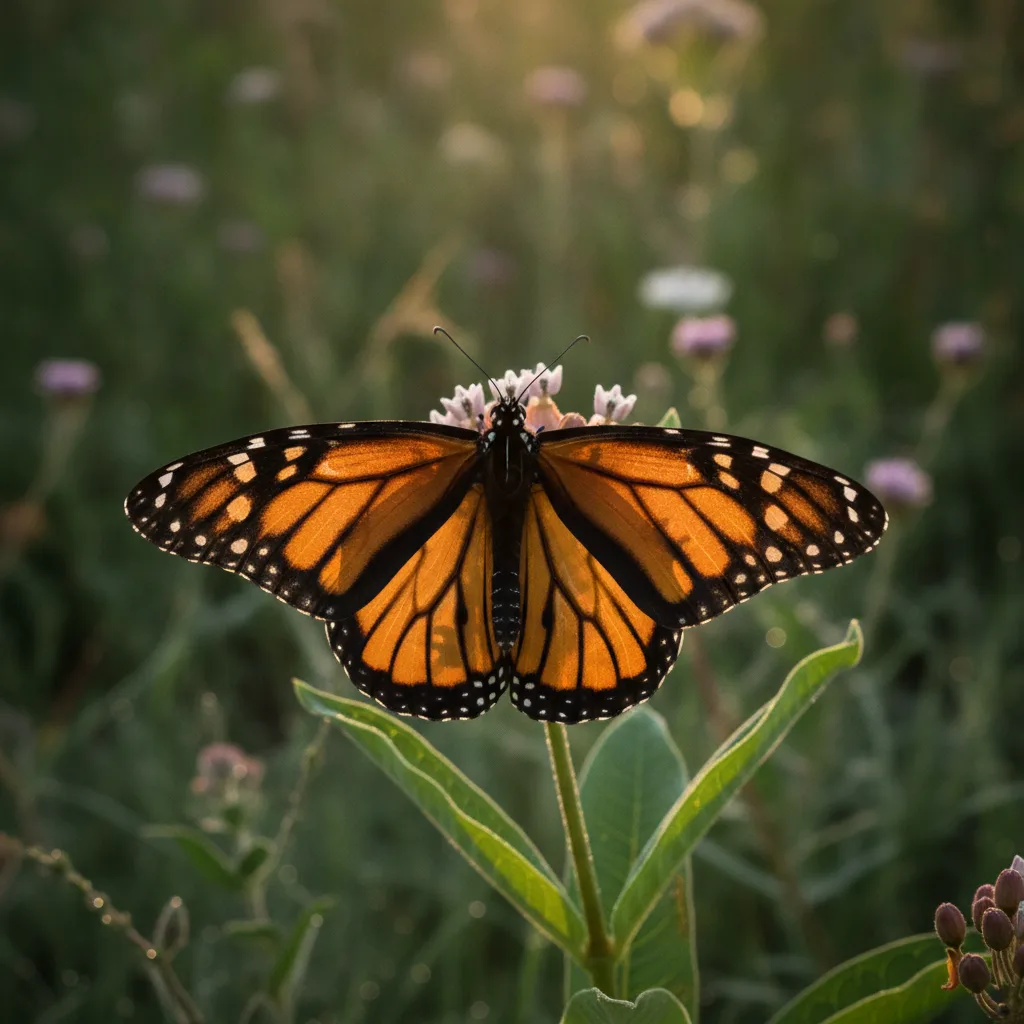
Butterfly
Butterflies are insects of the order Lepidoptera, and roughly 18,000 species are found everywhere except Antarctica, from alpine meadows to rainforest canopies. Each passes through four life stages — egg…
Bee
Bees are found on every continent except Antarctica, and of the roughly 20,000 species most live alone rather than in hives — the familiar honey bee is one of only…
Ant
Ants live almost everywhere on land outside Antarctica and a few remote islands, and with more than 14,000 described species they may number around 20 quadrillion individuals. Colonies act as…
Spider
Spiders are arachnids, not insects, with eight legs and usually eight eyes, and the more than 50,000 species live on every continent except Antarctica. All produce silk, which for its…
Monarch Butterfly
Monarch butterflies make one of the longest insect migrations on Earth: each autumn, monarchs from across eastern North America fly up to 4,800 kilometres to a few mountain forests in…
Praying Mantis
Praying mantises are named for the folded forelegs they hold as if in prayer, which snap out in a fraction of a second to seize flies, crickets and occasionally small…
Tarantula
Tarantulas are large, hairy spiders of the warm regions of the Americas, Africa, Asia and Australia, and the roughly 1,000 species include the goliath birdeater of South America, whose legs…